
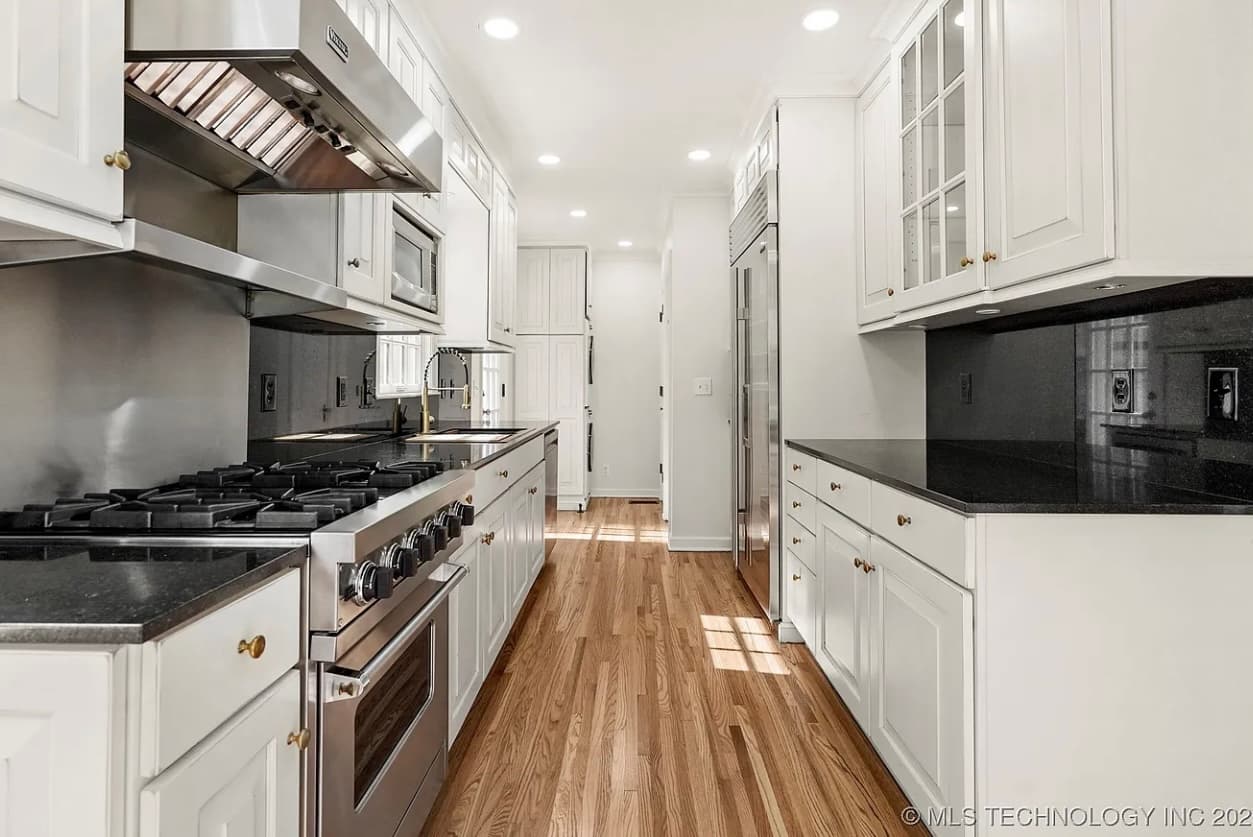
Cabinet painting in Tulsa is priced by how many doors and drawer fronts you have and the finish you choose. A small kitchen with a straightforward color change costs far less than a large kitchen with a premium sprayed urethane finish. Either way, it's a fraction of what new cabinets cost — which is exactly why it's one of the most requested jobs we do.
Ready to talk it through? Call (918) 265-9947 for a free, no-pressure estimate — or request one online.
Call (918) 265-9947Why Painting Beats Replacement
New cabinets are one of the most expensive line items in any kitchen project. A full replacement often runs many times what a quality paint job costs — before you've touched counters, flooring, or anything else. If your cabinet boxes are solid, painting gets you the same visual transformation for a small slice of that price. You keep the layout you already know works, skip the demolition, and your kitchen stays usable through most of the project.
Replacement makes sense when the boxes themselves are failing — water damage, particleboard that's swelling, or a layout you genuinely need to change. But for the majority of Tulsa kitchens we see, the boxes are fine and only the finish is dated. That's the sweet spot for painting.
The Process, Step by Step
A cabinet paint job that lasts is 80% prep. Here's how we do it:
1. Clean and degrease
Kitchen cabinets carry years of cooking grease and hand oils. We clean every surface thoroughly, because paint will not bond to a greasy door no matter how good the product is.
2. Sand and prep
We scuff-sand the surfaces so the primer has something to grip, fill any dents or grain we don't want showing, and label every door and drawer so it goes back exactly where it came from.
3. Prime
A bonding primer is what makes the difference between a finish that holds up to daily use and one that chips the first time a drawer closes hard. This step is not optional.
4. Spray or finish, then cure
We apply the finish coats — a sprayed application gives the smoothest, most factory-like result — and then let everything cure properly before reassembly. Rushing the cure is how you end up with a finish that stays tacky and marks easily.